All itineraries
— Kyoto · Japan

Kyoto Through a Lens

Three days of shrines, temples, and the light that makes them legendary

3 days15 stopsSMOVECITY EditorsUpdated October 2026

cultureclassicoutdoorsweekend
Kyoto Through a Lens — Kyoto

This three-day photo tour moves through Kyoto's most visually commanding layers — from the vermilion gates of Fushimi Inari at dawn to the mirror-still pond of Saihō-ji, the gravity of Enryaku-ji on Mount Hiei, and the golden shock of Kinkaku-ji in afternoon sun. Each day is structured around the quality of light: mornings for raking side-light on stone and wood, afternoons for depth and shadow in gardens, evenings for lantern glow and silhouette. No menus, no queues for tables — just Kyoto's sacred geography, frame after frame.

Day 1

  1. 06:30

    Fushimi Inari-taisha — First Light Through the Gates

    ~90 min

    Arrive before the city wakes. The thousand torii of Fushimi Inari compress into a tunnel of layered vermilion in early morning light, and the upper mountain trails are yours almost alone. Shoot looking back downhill for the most dramatic compression, or turn your lens toward the stone foxes draped in worn bibs.

    Fushimi Inari-taisha — First Light Through the Gates
  2. 08:30

    Tōfuku-ji Temple — Zen Geometry

    ~75 min

    A short walk north of Fushimi, Tōfuku-ji rewards the photographer with one of Kyoto's most rigorously designed dry garden complexes. The modern chequered moss-and-stone garden in the hojo contrasts sharply with the medieval wooden corridors overhead — two entirely different visual grammars in a single compound.

    Tōfuku-ji Temple — Zen Geometry
  3. 10:00

    Kyoto National Museum — Light Under Glass

    ~90 min

    Step into the Meiji-era red-brick main hall for the architecture alone, then move through the modern Heisei Chishinkan wing where masterworks of Buddhist sculpture sit under controlled gallery light. Even non-specialists will find the monumental Kamakura-period pieces arresting through a lens.

    Kyoto National Museum — Light Under Glass
  4. 12:00

    Kiyomizu-dera — Hillside and Horizon

    ~90 min

    The great wooden stage of Kiyomizu-dera cantilevers over the forested hillside without a single nail — a feat worth photographing from every angle. Shoot from the Okunoin sub-temple across the ravine for the classic three-quarter view, or descend to the Otowa waterfall for close-up stone and moss details in soft diffused light.

    Kiyomizu-dera — Hillside and Horizon
  5. 17:30

    Yasaka Shrine — Twilight and Lanterns

    ~60 min

    As the sun drops behind the Higashiyama hills, Yasaka Shrine's stone lanterns begin to glow one by one along the approach from Shijo. The main hall's orange lacquer and the hanging paper lanterns create a layered warmth that rewards long exposures and patience.

    Yasaka Shrine — Twilight and Lanterns

Day 2

  1. 09:00

    Kinkaku-ji Temple — Gold on Water

    ~75 min

    Morning light hits the gold-leafed pavilion from the east, and the reflection in Kyōkochi pond is sharpest in the first hour after opening. Resist the obvious straight-on shot and work the garden path for different angles where pine branches frame the upper storeys against the sky.

    Kinkaku-ji Temple — Gold on Water
  2. 10:30

    Ryōan-ji Temple — The Famous Fifteen Stones

    ~60 min

    Just minutes from Kinkaku-ji, the raked gravel garden here is one of the most photographed in Japan — yet finding a fresh angle is the challenge. Shoot from the far corners of the veranda to compress perspective, or focus on the weathered oil-clay wall whose colour deepens through the morning.

    Ryōan-ji Temple — The Famous Fifteen Stones
  3. 12:00

    Ninna-ji Temple — Pagoda and Pine

    ~75 min

    The five-storey pagoda of Ninna-ji rises above a grove of dwarf cherry trees whose gnarled trunks are photogenic year-round. The imperial compound's wide gravel forecourt gives you clean separation between the pagoda and sky — rare in Kyoto's often-cluttered temple districts.

    Ninna-ji Temple — Pagoda and Pine
  4. 14:00

    Tenryū-ji Temple — The Garden that Borrows the Mountain

    ~90 min

    Tenryū-ji's Sōgenchi garden is a masterclass in shakkei — borrowed scenery — where the Arashiyama hills become a living backdrop to the central pond. Afternoon light rakes across the surface and catches the mossy boulders; the covered corridor offers a natural frame for long garden compositions.

    Tenryū-ji Temple — The Garden that Borrows the Mountain
  5. 16:00

    Saihō-ji Temple — The Moss World

    ~90 min

    Advance reservation is required to enter Saihō-ji, known for a carpet of over 120 moss varieties that blankets the lower garden in every shade of green. Late-afternoon light filtering through the canopy creates a diffused, almost underwater quality — wide apertures and patience rewarded here.

    Saihō-ji Temple — The Moss World

Day 3

  1. 07:30

    Shimogamo Shrine — Forest Before the Shrine

    ~75 min

    The approach through Tadasu no Mori — a primeval forest that has stood since before Kyoto was a capital — is itself the photograph. Ancient trees line a gravel path where morning mist often lingers. The twin shrine halls at the end are a quieter, more intimate reward than the city's more visited sites.

    Shimogamo Shrine — Forest Before the Shrine
  2. 09:30

    Kyoto Imperial Palace — Stone, Pine, and Silence

    ~75 min

    The palace grounds open to the public and reward a slow circuit along the white-walled corridors and pond gardens. The Oike Pond's reflections and the stately Kenreimon gate offer strong symmetrical compositions in flat morning light.

    Kyoto Imperial Palace — Stone, Pine, and Silence
  3. 11:00

    Nijō Castle — Painted Corridors and Stone Ramparts

    ~90 min

    Nijō's Ninomaru Palace interiors are among the most vividly decorated of any Edo-period site — even from the garden side the painted sliding doors glow through open shutters. The stone ramparts and moat offer strong geometric lines for exterior compositions.

    Nijō Castle — Painted Corridors and Stone Ramparts
  4. 13:30

    Enryaku-ji Temple — Summit Solitude on Hiei

    ~120 min

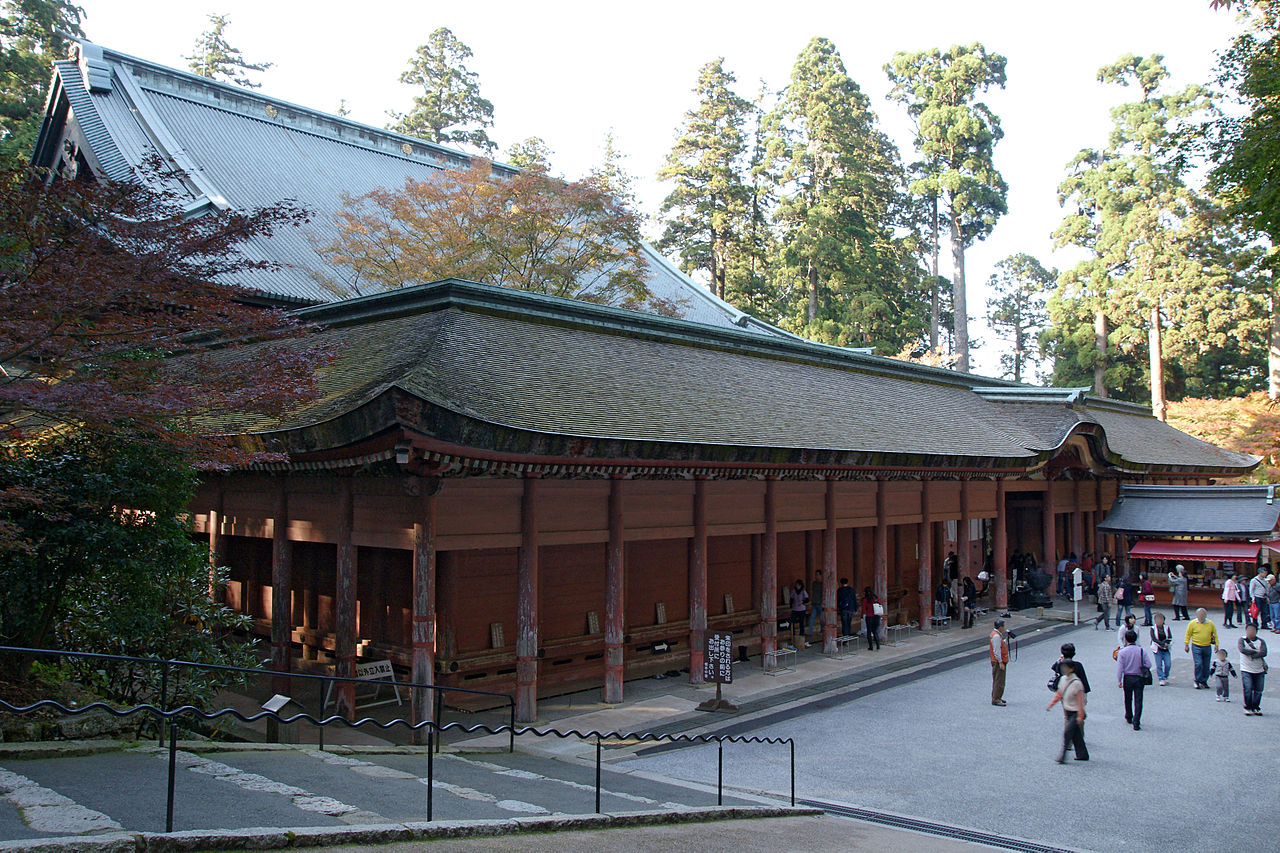
    The cable car and ropeway lift you above the city to a complex of halls draped in cedar forest at nearly 850 metres. The Konpon Chūdō's eternally burning flame is dimly lit and atmospheric; outside, the moss-covered stone lanterns along forest paths are among Kyoto's least photographed and most haunting subjects.

    Enryaku-ji Temple — Summit Solitude on Hiei
  5. 16:30

    Heian Jingū — Vermilion at Dusk

    ~75 min

    Return to the city for the day's final light. Heian Jingū's scale is theatrical — the great orange torii on the approach and the sweeping rooflines of the main hall are designed to impress. The garden behind the shrine turns golden at the last hour of sun, with its arched stone bridge doubling in the water below.

    Heian Jingū — Vermilion at Dusk

Good to know

How many days do I need for Kyoto?

Kyoto Through a Lens covers Kyoto in 3 days, with 15 planned stops. You can follow it exactly as published, or shorten and extend days after opening it in the SMOVECITY app.

Can I customize this itinerary?

Yes. Opening it in the SMOVECITY app turns it into your own editable trip — reorder days, add or remove stops, and invite friends to plan together with live co-editing.

How do I get around in Kyoto?

The SMOVECITY app shows public transport, shared bikes, e-scooters and other mobility options in Kyoto on one live map, so you can compare routes between the stops on this itinerary as you go.

Make this itinerary yours

Open it in the SMOVECITY app to turn it into your own trip — edit the days, invite friends, and get around Kyoto with live transit and shared mobility.